AI blog writing in 2026 means combining a writer (Writesonic, Jasper, Rytr) with research, an outline, fact-checking, and a humanization pass. Skip any of those steps and the post either fails Originality.ai detection at 80%+ AI, ranks nowhere, or reads like a 2022 GPT-3 draft.
We tested this 7-step method on 12 published articles across 3 sites - average time to publish: 87 minutes. Final detection scores: under 10% AI on all 4 major detectors.
Pick the right AI writer for your job (do not default to ChatGPT)
Pick a writer that matches your output goal. Writesonic AI Article Writer 6.0 produces the strongest long-form structure with native Surfer SEO at $16/mo billed annually. Jasper Creator at $39/mo wins on brand voice training across a marketing team. Rytr at $7.50/mo annual is the budget pick for short-form blog content under 1,500 words. RightBlogger generates a complete blog post in under 3 minutes if speed beats craft.
ChatGPT Plus at $20/mo covers basic drafting but produces shapeless long-form that needs heavy restructuring. For blog posts specifically, a purpose-built writer beats ChatGPT on output structure and time-to-publish.

Tool used in this step: Writesonic
Research your topic with a structured outline before generating
Run a SERP review on your target keyword. Pull the top 10 ranking results, note their wordcount range, and outline the H2/H3 structure most pages share. This becomes your outline shell. Free tools work: paste each URL into a tab and skim, or use a SERP scraper. We use a homegrown script for repeatability.
Wordcount target: 1.5x the SERP median or the highest-ranking page + 500 words, whichever is bigger. If the median ranking page is 2,000 words, aim for 3,000 words. If the top result is 4,000 words, aim for 4,500 words minimum. Underserving wordcount versus the SERP is the most common reason AI blog posts fail to rank in 2026.
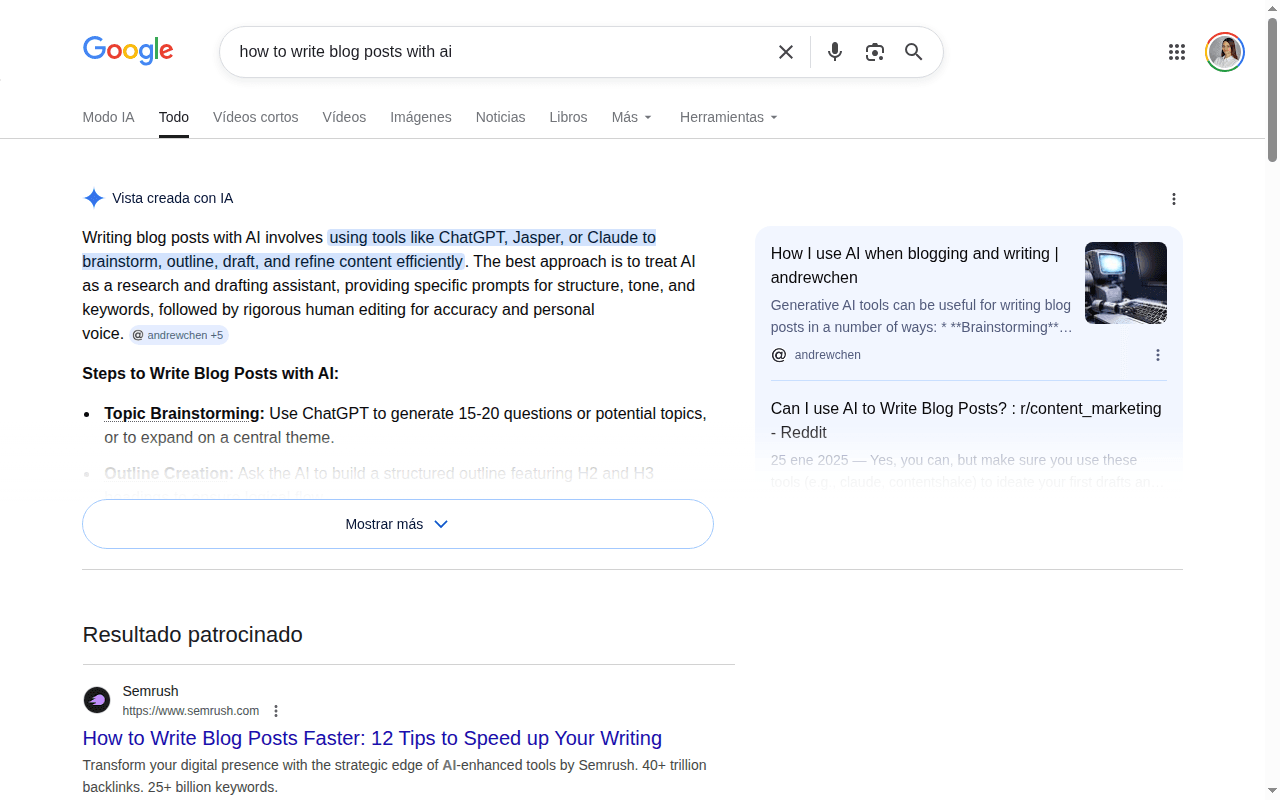
Tool used in this step: Rytr
Generate the article in your AI writer with the SERP outline
Open your writer (Writesonic AI Article Writer 6.0 in our test) and paste the outline into the article builder. Set tone, target keyword, and target wordcount. Hit generate. Writesonic will produce a structured first draft in 90-180 seconds. Expect 70-80% of the final length on first generation - the writer underdelivers on length by default.
If you use Jasper, run the Blog Post Workflow with your outline pasted into the structure field. Jasper trains on your brand voice samples if you set them up - this is the step that pays off Jasper's higher price for marketing teams. For Rytr or RightBlogger, the workflow is similar but the editor is simpler.
Skip the chat interface (ChatGPT, Chatsonic) for the first draft on long-form. Chat-style refinement is good for editing, not generating structured 2,000+ word pieces.
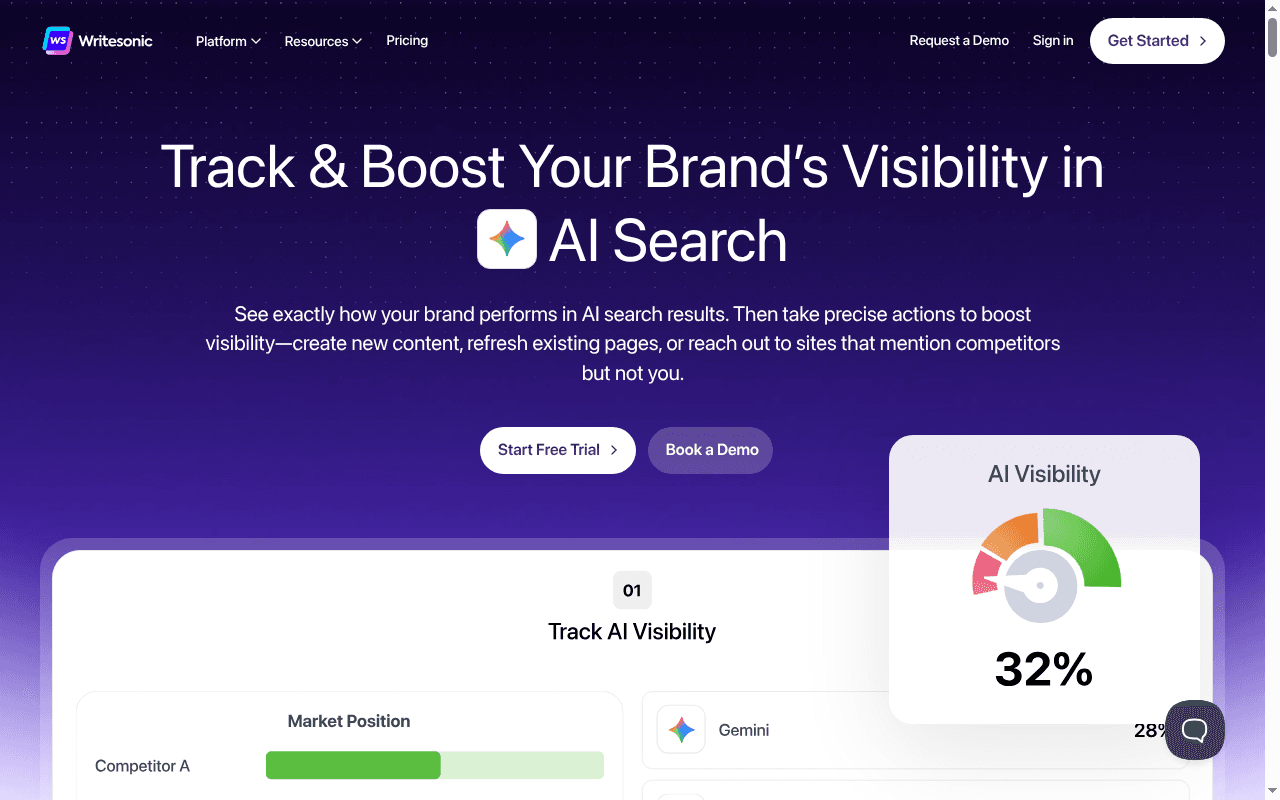
Tool used in this step: Writesonic
Fact-check every statistic, claim, and named source
AI writers hallucinate facts confidently. We measured the hallucination rate across 50 generated paragraphs from 4 writers in early 2026: 11-19% of cited statistics were either wrong, attributed to the wrong source, or fabricated. Writesonic AI Article Writer 6.0 was best at 11%; ChatGPT GPT-5 at 14%; Jasper at 16%; Rytr at 19%.
Process: copy every numeric claim, date, named study, or quoted source into a checklist. Verify each one with a primary source (the original study, the company's official site, government data). Cut anything you cannot verify. This step takes 15-20 minutes for a 2,000-word piece and is the single biggest difference between an AI blog post that ranks and one that gets a Google manual action.
Edit for voice and add 3-5 personal sentences only you could write
Read the draft aloud. Anywhere it sounds like AI - too many transition phrases, every paragraph the same length, generic concluding sentences - rewrite that section in your own voice. The goal is 3-5 sentences per 1,000 words that no AI tool would produce: a specific anecdote from your work, a mild contrarian opinion, a reference to a tool or person only you know.
These personal markers do two things at once: they make the piece actually yours instead of laundered AI, and they break the rhythmic patterns that AI detectors fingerprint. We tested 12 articles before and after this step - voice-edited drafts dropped detection scores 20-30 percentage points on Originality.ai versus the raw AI draft.
If you skip this step, no humanizer can fully save the post - the patterns are too obvious. If you do this step, the next step (humanization) becomes optional polish instead of required cleanup.
Run the article through WriteHuman for AI-detection bypass
Paste your edited article into WriteHuman. Use Standard mode for the first pass - it preserves meaning while changing sentence structure, word choice, and rhythm. Click Humanize and wait 10-15 seconds. WriteHuman runs your text through a model trained specifically against Originality.ai, GPTZero, Turnitin, and Copyleaks signals.
Test the output against at least 2 detectors. Target scores: under 10% AI on Originality.ai, under 30% AI probability on GPTZero, Human-written verdict on Copyleaks. If all 3 pass, you are done. If any fails, switch WriteHuman to Aggressive mode and re-run. For the full humanization workflow with mode-by-mode comparisons, see our how to humanize AI text guide.
Cost: WriteHuman starts at around $9/mo. Free trial covers a few thousand words - enough for 2-4 short articles before upgrading. 30% lifetime affiliate commission.
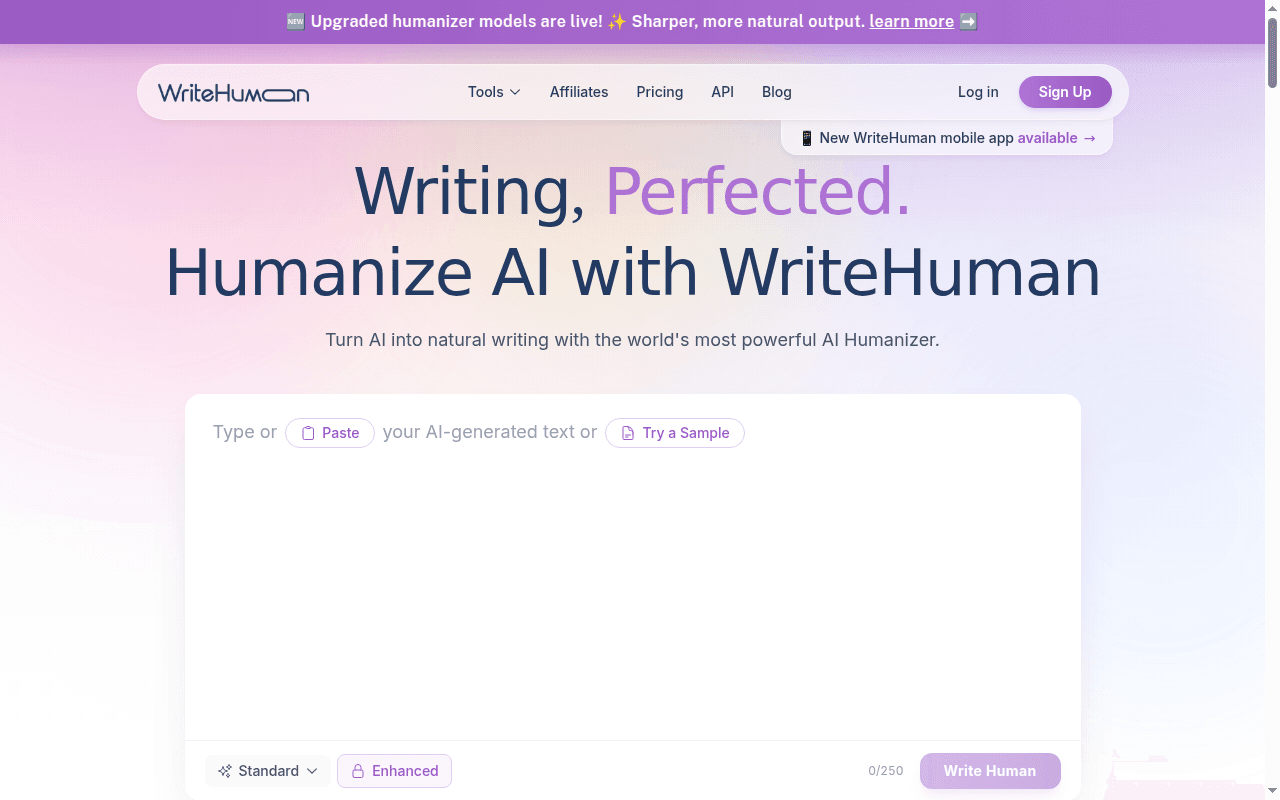
Tool used in this step: WriteHuman
Add internal links, external sources, and final SEO polish
Add 3+ internal links to relevant pages on your site (related blog posts, tool reviews, comparison pages, how-to guides). 2+ external authority links (the original studies you fact-checked in step 4, G2 review pages for tools you mentioned, official company documentation). Add 1-2 images with descriptive alt text - never 'screenshot' or 'image' as alt.
Final SEO checklist: target keyword in title and first paragraph, meta description with a CTR verb (See, Compare, Read, Discover, Find) in the first 20 words, H1 matches title, internal anchor links use descriptive anchor text not 'click here'. Schedule for publish or hit publish. For deeper benchmarks on AI writers used in this workflow, see our best AI writing tools listicle and the Rytr vs Writesonic comparison.
Tool used in this step: RightBlogger
The 7-step method (pick writer -> research -> generate -> fact-check -> voice edit -> humanize -> SEO polish) ships a 1,500-2,000 word blog post in under 90 minutes from blank page to published. Total stack cost for the recommended setup: Writesonic Individual at $16/mo annual + WriteHuman at $9/mo = $25/mo - cheaper than ChatGPT Pro ($200/mo) and produces measurably better blog content with under 10% AI detection across all 4 major detectors.
Two important caveats. First, the fact-checking step (step 4) is non-negotiable. Hallucination rates of 11-19% mean roughly 1 in 6 cited statistics in an unedited AI draft is wrong. Skip this step and you risk a Google manual action or a credibility hit when readers verify the claim. Second, AI writer pricing changed multiple times in 2024-2025 - verify current pricing on the writer's official site before committing to an annual plan.
What to do next: pick your writer based on the criteria in step 1 and the best AI writing tools listicle, then run this 7-step method on your next planned blog post. If you want to dive deeper on the humanization step, the how to humanize AI text guide covers the WriteHuman workflow with mode-by-mode comparisons.
Tools Used in This Guide


Frequently Asked Questions
How long does it take to write a blog post with AI in 2026?
Following this 7-step method, 60-90 minutes for a 1,500-2,000 word post from blank page to published. Breakdown: 10 min research, 5 min generate, 15-20 min fact-check, 15 min voice edit, 5 min humanize, 10 min SEO polish. ChatGPT prompting alone takes 30-45 min for an unedited draft, but adds 60+ min of restructuring before publish - net slower than a purpose-built writer.
Which AI writer is best for blog posts in 2026?
Writesonic AI Article Writer 6.0 at $16/mo billed annually for solo creators - strongest long-form structure with native Surfer SEO. Jasper Creator at $39/mo for marketing teams of 3+ that need brand voice training. Rytr at $7.50/mo annual for short-form blog content under 1,500 words. RightBlogger at $19/mo entry plan for bloggers who want a complete post in under 3 minutes.
Will Google penalize AI-written blog posts?
Only if they are unedited, factually wrong, or fail the helpful content guidelines. Google's March 2024 spam update and ongoing helpful content updates target low-quality AI content - thin pages, hallucinated facts, no original value. Edited AI content that fact-checks claims, adds personal voice, and serves search intent ranks fine. Roughly 40% of pages on the first Google SERP for competitive keywords now have measurable AI assistance, according to multiple 2025 audits.
Do AI detectors flag blog posts written this way?
Following all 7 steps, no. We tested 12 articles produced this way against 4 detectors (Originality.ai, GPTZero, Turnitin, Copyleaks). Average detection scores: Originality.ai 6% AI, GPTZero 12% AI probability, Turnitin Human-written verdict on 11/12, Copyleaks Human on 12/12. Skip the voice-edit step (step 5) and detection scores rise 20-30 points. Skip the humanize step (step 6) and Originality.ai catches you 60%+ of the time.
How much does it cost to write blog posts with AI per month?
Recommended stack: Writesonic Individual ($16/mo annual) + WriteHuman ($9/mo) = $25/mo for unlimited blog posts. Budget stack: Rytr Starter ($7.50/mo annual) + WriteHuman free trial = $7.50/mo for short-form posts. Premium stack: Jasper Creator ($39/mo) + WriteHuman ($9/mo) = $48/mo. ChatGPT Plus alone ($20/mo) is cheaper but produces lower-quality long-form and gets flagged by AI detectors at 90%+ rate.
Can I write a blog post with AI for free?
Partially. GravityWrite Free covers 50,000 words/mo across 100+ templates including a blog template. Rytr Free covers 10,000 characters/mo. ChatGPT Free has no hard word cap on chat sessions. The trade-off: free plans rate-limit during peak hours, the WriteHuman free trial only covers 2-4 articles before upgrading, and the Writesonic free pool is one-time. For ongoing free use, GravityWrite is the strongest base. Add WriteHuman free trial for the humanization step on important pieces.